
Leeds South Bank & The Tetley — Riverside Culture
Discover art, food, and creativity at Leeds South Bank & The Tetley — where Leeds’ industrial past meets its vibrant future The Tetley Hunslet Road Leeds LS10 1JQ
Call us anytime 0113 320 2323
www.thetetley.org
Open Wed-Sun: 10:00 am – 5:00 pm (for The Tetley – gallery / visitor side)
info@thetetley.org
Specification
Where Leeds’ Industrial Heritage Meets a New City District
Leeds South Bank is one of the city’s most ambitious regeneration areas, stretching south from the River Aire and connecting the traditional city centre with Holbeck, Hunslet, Leeds Dock, and surrounding neighbourhoods. Leeds City Council’s long-term vision is for a mixed-use district built around new public spaces, better riverside connections, heritage buildings, homes, workplaces, and cultural attractions.
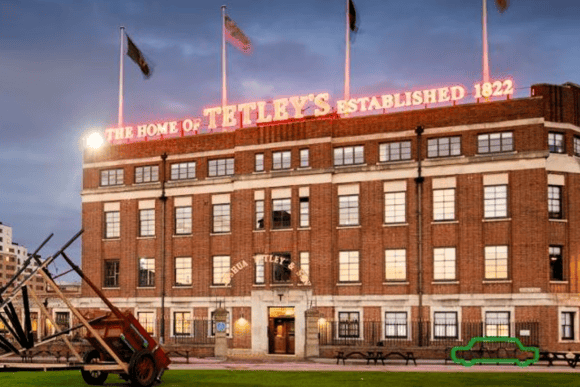
At its heart stands The Tetley, the imposing former headquarters of Joshua Tetley & Son and one of the most recognisable survivors of Leeds’ brewing heritage.
Today, the historic building overlooks the emerging Aire Park, creating a fascinating contrast between industrial architecture and one of the biggest transformations of Leeds city centre.
It’s an excellent area for discovering a different side of Leeds.
From Industrial South Bank to a New City Quarter
For generations, the South Bank was dominated by factories, warehouses, railway infrastructure, engineering works, and breweries.
Its position beside the River Aire and close to Leeds railway station made it an important part of the city’s industrial economy.
Today, many historic buildings remain, but the district is being transformed with:
New homes
Offices and workspaces
Parks and gardens
Walking and cycling routes
Riverside public spaces
Restaurants and cafés
Cultural venues
Restored industrial architecture
The South Bank regeneration framework places particular importance on retaining and reusing landmark heritage buildings, with The Tetley specifically identified as part of the area’s industrial character.
Exploring Leeds South Bank & The Tetley
1. The Tetley
The Tetley is the natural landmark around which to begin exploring.
Its imposing Art Deco-influenced former brewery headquarters stands as a reminder of the enormous importance brewing once had to Leeds.
The building formerly served as the headquarters of Joshua Tetley & Son, which became one of the world’s major producers of cask beer.
For several years after the brewery closed, the building became widely known as a contemporary arts venue.
Today, its role has changed again.
Kirkstall Brewery took over stewardship in 2024, reopening the building around its brewing heritage with beer, food, events, and hospitality. Its continued operation was confirmed through summer 2026 and beyond.
That evolution makes The Tetley an interesting example of how historic industrial buildings can repeatedly adapt while retaining their connection with local identity.
2. Aire Park
Surrounding The Tetley is the developing Aire Park, a major new green space at the centre of South Bank regeneration.
The overall park is planned to cover approximately 3.5 hectares (eight acres) and provide a sequence of interconnected gardens, lawns, pathways, event areas, and public spaces.
Features planned or already delivered include:
Tetley Green
Theatre Gardens
Landscaped lawns
Public art
Walking routes
Cycling connections
Play and exercise spaces
Event areas
Tree-lined avenues
Tetley Green was one of the first sections completed, introducing new lawns and planting immediately beside the historic Tetley building.
The combination of red-brick industrial architecture and contemporary landscaping has already created one of the area’s most distinctive urban scenes.
3. Tetley Green & Theatre Gardens
Tetley Green provides an open lawn directly beside The Tetley, surrounded by paths, planting, seating, and young trees.
Nearby Theatre Gardens provides another landscaped connection towards the River Aire, incorporating planting, seating areas, performance spaces, and public art.
Together, these spaces are helping transform land once associated with industry and roads into a greener pedestrian-friendly district.
4. Riverside Walks
The River Aire forms the northern edge of the South Bank and is central to the area’s regeneration.
Walking routes connect the district with:
Leeds Bridge
Brewery Wharf
Leeds Dock
The Calls
City centre
Granary Wharf
The South Bank masterplan specifically identifies the waterfront as a major opportunity for leisure, recreation, events, and improved connections.
Therefore, exploring on foot is one of the best ways to understand how the historic industrial district connects with modern Leeds.
David Oluwale Bridge
One of the South Bank’s newer landmarks is the David Oluwale Bridge, which opened in 2023.
The pedestrian bridge crosses the River Aire and commemorates David Oluwale, a British-Nigerian man whose death in Leeds in 1969 became an important part of the city’s social history.
The bridge also creates an important pedestrian connection between the South Bank and the northern side of the river.
At night, its illuminated structure creates striking reflections across the water.
The Tetley Brewing Heritage
Tetley’s association with Leeds stretches back to the 19th century, eventually developing into one of the city’s most famous industrial names.
The former headquarters still carries prominent rooftop lettering proclaiming:
“THE HOME OF TETLEY’S ESTABLISHED 1822.”
Although much of the original brewery complex disappeared following its closure, the headquarters survives as an important reminder of the city’s brewing and manufacturing history.
Its reuse demonstrates one of the central ideas behind South Bank regeneration — preserving significant industrial buildings while finding new purposes for them.
Public Art
Art continues to play an important role in the evolving South Bank landscape.
One of the area’s most prominent pieces is Hibiscus Rising, a colourful public sculpture by internationally renowned artist Yinka Shonibare.
The sculpture stands within the developing Aire Park landscape and forms part of the area’s connection with the story and legacy of David Oluwale.
Public artworks, landscaped spaces, and restored industrial buildings increasingly make the South Bank rewarding for photography as well as walking.
Architecture and Industrial Heritage
One of the most interesting aspects of exploring South Bank is the contrast between old and new.
Visitors can see:
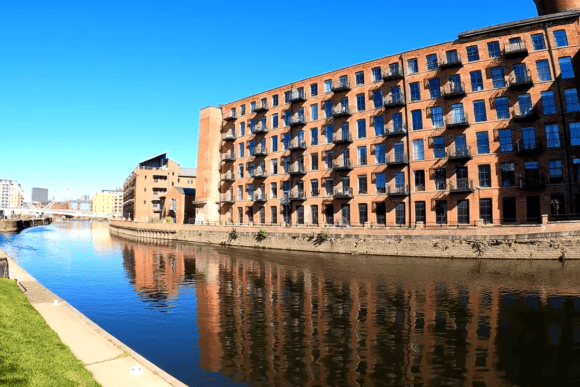
Former industrial buildings
Historic warehouses
Victorian railway infrastructure
Red-brick factories
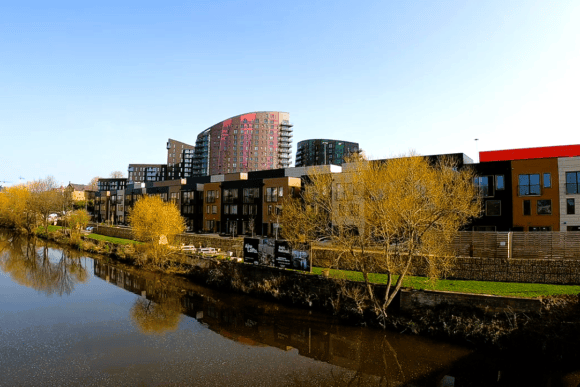
Contemporary apartments
Modern offices
New bridges
Landscaped public spaces
The Tetley remains one of the strongest visual reminders of the area’s industrial past.
Elsewhere, the wider South Bank includes important heritage areas such as Temple, where regeneration plans are centred partly around the restoration and reuse of the Grade I-listed Temple Works.
Food, Drink & Riverside Living
South Bank’s food and drink scene is growing fast — blending independent cafés with contemporary dining.
Canteen & Cocktails – Laid-back dining in a converted industrial space.
Leeds Dock Kitchen – Great brunch and river views.
The Tetley Bar & Kitchen – Yorkshire-inspired dishes and local ales.
The area’s riverside walkways also make it perfect for a relaxing stroll or evening out with friends.
A District Still Evolving
Part of the attraction of Leeds South Bank is that its transformation is still visible.
New buildings and public spaces are appearing alongside surviving industrial landmarks. Aire Park is being delivered in phases, while further residential and commercial development continues across the wider district.
The long-term South Bank vision includes thousands of new homes and jobs alongside improved connections, public spaces, and amenities.
Visitors today are therefore seeing a neighbourhood in the middle of one of the most significant periods of change in its history.
Visiting Leeds South Bank & The Tetley
How to Get There
Location: South Bank, Leeds city centre
The Tetley: Hunslet Road, Leeds, LS10 1JQ
Train: Leeds railway station is within walking distance
Bus: Numerous services operate around Hunslet Road and Leeds city centre
Walk: Easily reached from Leeds Bridge, The Calls, Brewery Wharf, and the city centre
Cycle: New and improved cycling connections form part of the South Bank and Aire Park development
Opening Hours & Admission
South Bank’s public streets and open spaces are free to explore
Aire Park public areas are free
The Tetley has its own opening hours
Individual events may require tickets
Facilities
Pub and dining
Public green spaces
Seating areas
Walking routes
Cycle routes
Nearby cafés and restaurants
Public transport connections
Accessible routes through newer public spaces
Visit Visit Leeds – The Tetley for current information about The Tetley, including opening hours and events.
Nearby Attractions
Leeds Dock — Regenerated waterfront district with museums, restaurants, events, and canal-side walks
Royal Armouries Museum — National museum displaying arms and armour from around the world
Leeds Corn Exchange — Magnificent Victorian building filled with independent shops and businesses
Kirkgate Market — One of Europe’s largest indoor markets and an important part of Leeds’ commercial heritage
Together, these attractions make the South Bank an excellent starting point for exploring Leeds’ industrial, cultural, and waterfront heritage.
Why Visit Leeds South Bank & The Tetley?
The Leeds South Bank & The Tetley experience offers:
Historic brewing and industrial heritage
The landmark former Tetley Brewery headquarters
Aire Park and new city-centre green spaces
Public art and contemporary urban design
Excellent riverside walking routes
Whether you’re interested in architecture, industrial history, photography, public art, regeneration, food, or simply discovering a less familiar part of Leeds, the South Bank offers a fascinating city experience.
It’s not just a regenerated neighbourhood — it’s a part of Leeds where brewing heritage, historic architecture, riverside landscapes, public art, and ambitious modern regeneration are creating an entirely new city district.
No Reviews