
Hod Hill — An Iron Age Hillfort with a Roman Fort
Explore a Large Hillfort Overlooking the Stour with Clear Roman Remains Stourpaine, Nr Blandford Forum, Dorset, DT11 8PR
Call us anytime 01297 489481
https://www.nationaltrust.org.uk/visit/dorset/hod-hill
Open every day from dawn to dusk
westdorset@nationaltrust.org.uk
Specification
A Hilltop Site with Two Historic Layers
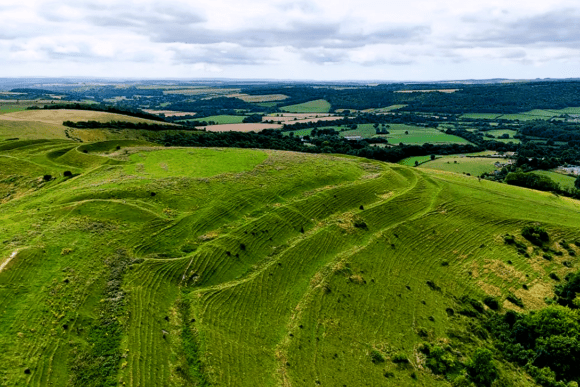
Above the River Stour near Stourpaine, Hod Hill combines an Iron Age hillfort with a Roman fort inside its ramparts.
The wide views, open ground, and clear earthworks make it one of Dorset’s most accessible ancient sites.
Today, visitors can explore both prehistoric and Roman features in a single walk.
It’s a large, open hilltop rich in archaeology.
Iron Age Origins
Hod Hill began as a substantial Iron Age hillfort.
Its ramparts once protected a thriving settlement on the summit.
Therefore, the earthworks you see today reflect centuries of use and community life.
Excavations uncovered:
Roundhouse platforms
Storage pits
Boundary banks
Tools and pottery
In addition, the scale of the fort shows its regional importance.
Roman Conquest and Fort Construction
In the 1st century AD, the Roman army captured Hod Hill.
They built a square fort in the northwest corner of the hilltop.
This layout is still easy to identify from its banks and ditches.
The Roman fort included:
Defensive ramparts
Barrack blocks
Headquarters buildings
A commanding view of the Stour Valley
Moreover, the fort’s placement inside an existing hillfort highlights the strategic value of the site.
Exploring Hod Hill
1. The Iron Age Ramparts
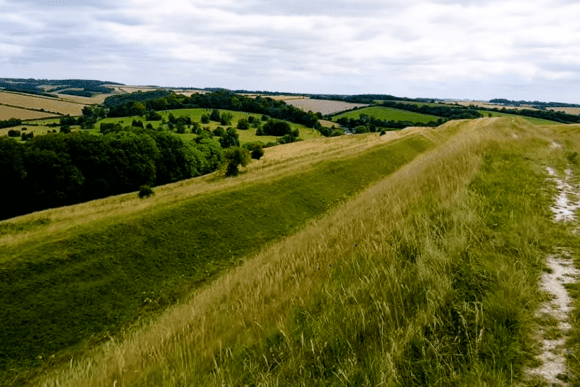
The double ramparts run around most of the hilltop.
Walking along them reveals the defensive design and sweeping views.
In addition, the steep slopes show why the hill was easy to defend.
2. The Roman Fort Interior
The Roman fort is a clear square enclosure.
Banks, corners, and gateways remain visible on the ground.
Furthermore, the fort’s footprint helps visitors understand how Roman troops organised their space.
3. Views Across the Stour Valley
Hod Hill overlooks the River Stour, Hambledon Hill, and farmland stretching into North Dorset.
These views make the hill a rewarding place for photography and quiet walks.
Moreover, the landscape helps explain why the Romans chose the site.
(Learn more at the National Trust’s official Hod Hill page.)
Wildlife and Natural Landscape
Chalk grassland covers the hilltop and slopes.
Butterflies, wildflowers, and grazing animals maintain the habitat.
Because the site is open and rural, wildlife is easy to spot on warm days.
In addition, the hill changes character seasonally, from bright summer grass to crisp winter views.
Walks and Nearby Sites
Visitors often link Hod Hill with nearby historic landscapes.
Popular routes include:
Walks to Hambledon Hill
Circular paths around the Stour Valley
Trails to Shillingstone and Child Okeford
Ridge routes across the Dorset downs
For more Dorset hillforts, see our guides to Hambledon Hill and Badbury Rings.
Visiting Hod Hill
How to Get There
Location: Near Stourpaine, Dorset
Parking: Small National Trust car park
Train: Gillingham (Dorset)
Bus: Local services to Stourpaine
Opening Hours & Admission
Open daily
Free access
Facilities
No toilets or café
Grassy paths and steep slopes
Interpretation signs at the entrance
Nearby Attractions
Hambledon Hill — Neolithic and Iron Age earthworks
Shillingstone Station — Heritage railway
Sturminster Newton Mill — Working watermill
Fiddleford Manor — Medieval manor house
Together, these form the North Dorset Hillfort Trail.
Why Visit Hod Hill?
The Hod Hill experience offers:
Iron Age ramparts and Roman remains
Wide countryside views
Peaceful walking routes
Free, open-air access
Whether you enjoy archaeology, long walks, or historic landscapes, Hod Hill is one of Dorset’s most rewarding hillforts.
It’s not just a fort — it’s a layered historic site overlooking the Stour Valley.
No Reviews