
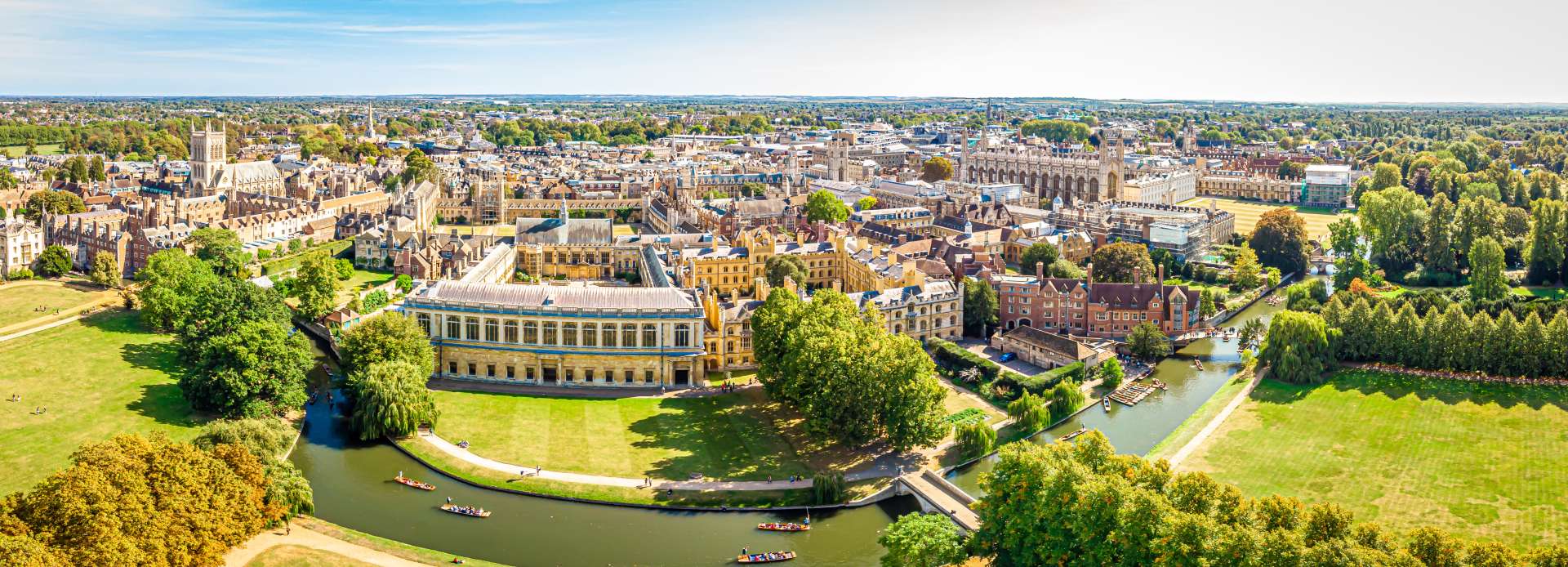
Hailes Abbey — Cistercian Ruins in the Cotswolds
Explore Peaceful Monastic Ruins, Medieval History, and Quiet Gloucestershire Countryside Hailes, Winchcombe, Cheltenham, Gloucestershire, GL54 5PB
Call us anytime +44 370 333 1181
https://www.english-heritage.org.uk/visit/places/hailes-abbey/
Open Apr–Oct: Daily 10:00–17:00; Nov–Mar: Weekends 10:00–16:00
customers@english-heritage.org.uk
Specification
Quiet Monastic Ruins in a Rural Setting
Near Winchcombe, Hailes Abbey preserves the remains of a Cistercian monastery founded in the 13th century.
Its cloister walls, church foundations, and green spaces offer a calm visit in the Cotswold landscape.
Today, the ruins tell the story of medieval devotion, pilgrimage, and the Dissolution.
It’s a peaceful heritage site with clear historical features.
A Cistercian Community and a Pilgrimage Shrine
Hailes Abbey was founded in 1246 by Richard, Earl of Cornwall.
It became known across Britain for housing a holy relic said to be the Blood of Christ.
Therefore, the abbey attracted thousands of pilgrims through the Middle Ages.
However, after the Dissolution under Henry VIII, the relic was declared false and the abbey was surrendered in 1539.
Its buildings were dismantled, leaving the ruins seen today.
Key medieval features still visible include:
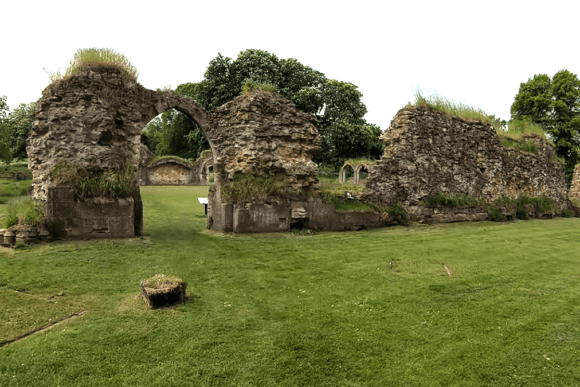
Cloister walls
Church foundations
Chapter house remains
Drainage channels
In addition, local archaeological finds reveal daily monastic life.
Exploring Hailes Abbey
1. The Church and Cloister
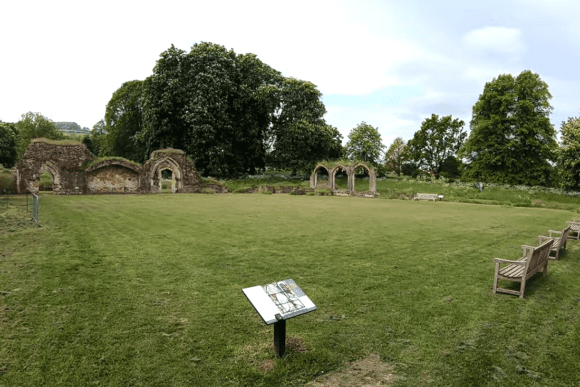
The footprints of the great abbey church remain clear.
Visitors can follow the layout from nave to presbytery.
In addition, the cloister walk outlines the heart of the monastic community.
2. The Chapter House
Stone benches and walls survive from the chapter house.
This was where the monks met, read rules, and handled daily decisions.
Moreover, its layout shows the simplicity typical of Cistercian design.
3. The Museum
A small museum near the site displays carved stonework, floor tiles, and decorative fragments.
Panels explain the abbey’s history, its relic, and its destruction.
Furthermore, the collection provides context for the ruins outside.
(Learn more at the English Heritage page for Hailes Abbey.)
Landscape and Setting
Hailes Abbey sits in a quiet valley.
Grass, old walls, and open sky give the site a calm atmosphere.
Because the area is rural, birdlife and wildflowers are common.
In addition, short paths around the ruins provide easy walking.
Walks and Nearby Sites
Visitors often combine Hailes Abbey with nearby heritage and countryside routes.
Popular options include:
Walks toward Winchcombe
Routes linking to Sudeley Castle
Country paths across the Cotswolds
Short trails to Hailes Church
For more medieval monastic sites, see our guide to Gloucester Cathedral.
Visiting Hailes Abbey
How to Get There
Location: Near Winchcombe, Gloucestershire
Parking: Small car park beside the site
Train: Cheltenham Spa or Toddington (heritage railway)
Bus: Local services to Winchcombe
Opening Hours & Admission
Open seasonally
Entry fee applies (free for English Heritage members)
Facilities
Small museum
Toilets
Benches and grassy walkways
Information boards
Nearby Attractions
Sudeley Castle — Historic castle with gardens
Winchcombe — Historic town with heritage trails
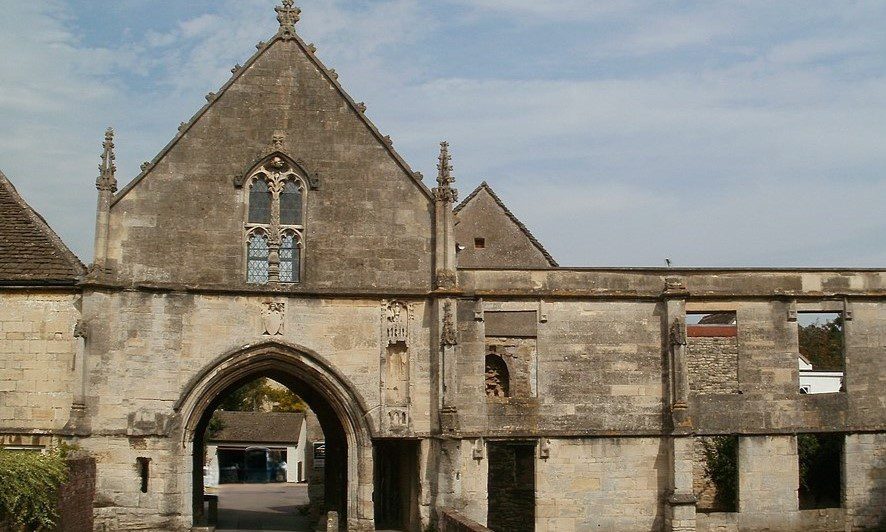
Hailes Church — Medieval parish church beside the site
Stanway House — Jacobean house and estate
Together, these form the Cotswold Abbeys & Castles Trail.
Why Visit Hailes Abbey?
The Hailes Abbey experience offers:
Cistercian monastic ruins
Pilgrimage history
Peaceful rural surroundings
Clear archaeological remains
Whether you enjoy medieval history, religious heritage, or quiet countryside visits, Hailes Abbey provides a calm and informative experience.
It’s not just a ruin — it’s a former centre of worship, pilgrimage, and monastic life.
No Reviews