
Greyfriars, Gloucester — Medieval Friary Ruins
Explore the Remains of a 13th-Century Franciscan Friary in the City Centre Greyfriars, off Southgate Street, Gloucester, GL1 1TS
Call us anytime +44 370 333 1181
https://www.english-heritage.org.uk/visit/places/greyfriars/
Open any reasonable time during daylight hours
customers@english-heritage.org.uk
Specification
A Franciscan Friary Hidden Behind the City Streets
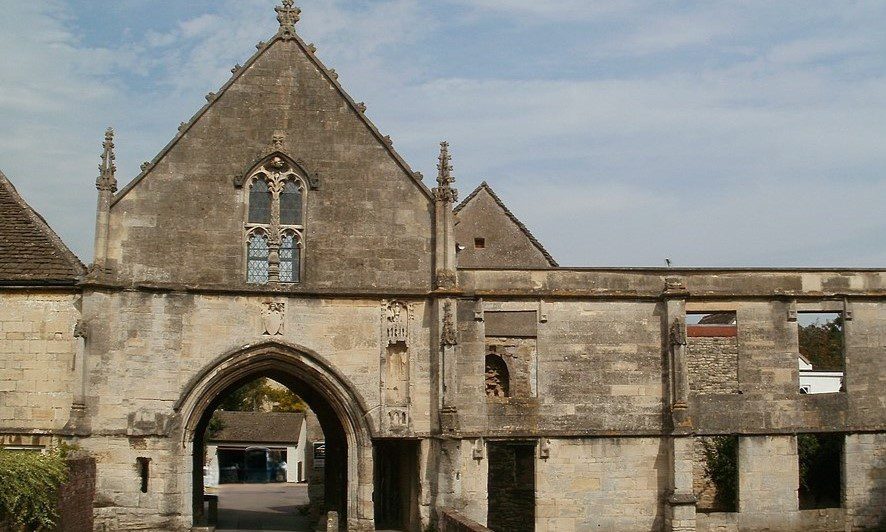
Behind Southgate Street in Gloucester, Greyfriars preserves the core remains of a medieval Franciscan friary.
Built in the 1200s, it served as a place of worship, community service, and religious study.
Today, the ruins stand in a quiet open space just steps from the modern city.
It’s a simple historic site with strong medieval character.
A 13th-Century Franciscan Foundation
The friary was founded by the Franciscan order during the 13th century.
Its church, cloister, and living spaces once formed a large religious complex.
Therefore, Greyfriars reflects the Franciscan role in medieval urban life.
Historic records mention:
Preaching and teaching
Provision for the poor
Prayer and study
Strong links to the city community
In addition, the friary was supported by local benefactors.
Greyfriars After the Dissolution
In the 1530s, Henry VIII dissolved the monasteries.
Greyfriars was closed, its assets taken, and its buildings reused.
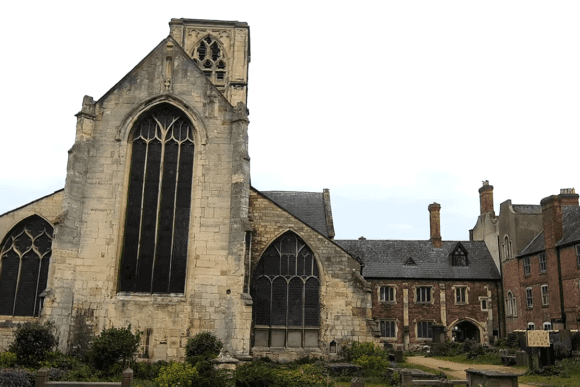
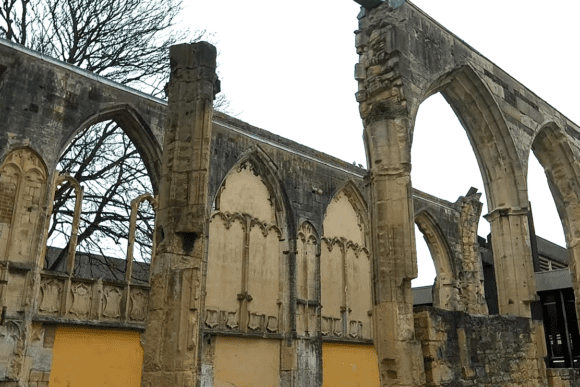
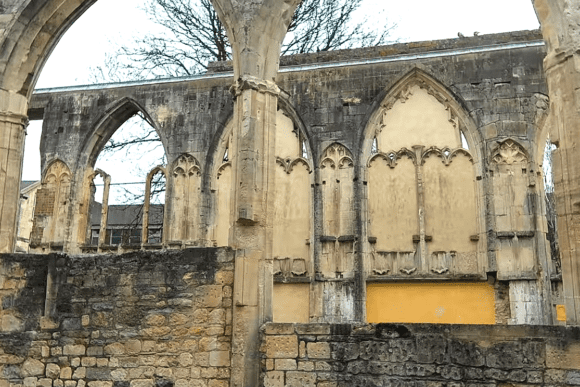
However, parts of the church survived and remain visible today.
Sections that still stand include:
Tall nave walls
Window openings
Stone arcades
Traces of the cloister range
Moreover, later development shaped the site around the surviving ruins.
Exploring Greyfriars
1. Surviving Church Structure
The most visible remains are from the friary church.
Stone walls and high openings reveal its medieval layout.
In addition, the long footprint shows the scale of the original building.
2. Cloister Fragments
Low walls and structural traces suggest the position of the cloister.
This space once connected living, prayer, and working areas.
Furthermore, the fragments help explain how friars moved around the site.
3. Quiet Space in the City
Although close to Southgate Street, the ruins feel calm and sheltered.
Visitors can walk through the grounds, examine the stonework, and enjoy a peaceful pause.
The contrast between medieval remains and modern buildings highlights the site’s long story.
(Learn more at the English Heritage website)
Location and Surroundings
Greyfriars sits close to other historic areas of Gloucester.
Visitors often link the ruins with:
St Michael’s Tower
Walks around the docks and historic quays
Visiting Greyfriars, Gloucester
How to Get There
Location: Off Southgate Street, Gloucester city centre
Parking: City centre car parks nearby
Train: Gloucester Station (short walk)
Bus: Regular services to the city centre
Opening Hours & Admission
Open space with free access
Viewable from the surrounding footpaths
Facilities
No café or toilets on site
Shops and restaurants nearby
Interpretation information online
Nearby Attractions
Gloucester Cathedral — Major medieval church
Blackfriars Priory — Restored Dominican friary
Gloucester Docks — Historic waterfront
Museum of Gloucester — Local heritage collections
Together, these form the Gloucester Medieval & Monastic Trail.
Why Visit Greyfriars?
The Greyfriars experience offers:
Medieval friary ruins
Central location
Quiet open space
Clear surviving church structure
Whether you enjoy monastic sites, medieval history, or urban archaeology, Greyfriars provides a short but meaningful visit.
It’s not just a ruin — it’s a reminder of centuries of Franciscan life in the heart of Gloucester.
No Reviews