
Clifton Hall — Medieval Tower of a Cumbrian Manor
Visit the Surviving 15th-Century Tower of a Former Manor House Clifton, Penrith, Cumbria, CA10 2EY
Call us anytime +443703331181
https://www.english-heritage.org.uk/visit/places/clifton-hall/
open during daylight hours
Specification
A Lone Tower in the Cumbrian Countryside
Just south of Penrith in Clifton, Clifton Hall is a red sandstone tower from a former medieval manor house.
It stands near farm buildings and fields, quietly showing life in Cumberland along the Anglo-Scottish border.
Today, the tower remains as the most visible part of the old manor complex.
It’s a compact ruin with clear medieval character.
Origins Around 1400
Clifton Hall began as a manor house built in the late 14th century by the Engaine family or their successors.
An “H-plan” layout originally included a central hall and two wings.
Around 1475, a three-storey stone tower was added, likely to give both status and defence along a frontier region
A Tower of Status and Shelter
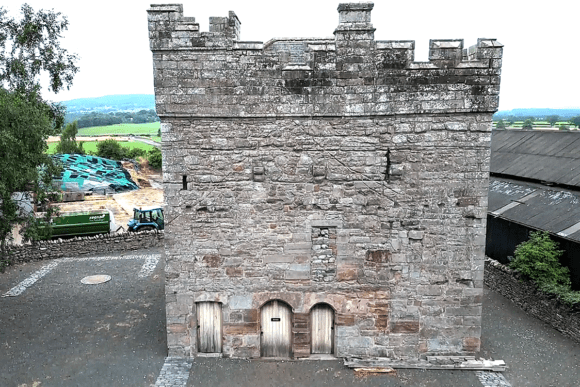
The tower wing is the only part that survives today.
It is built of thick red sandstone with walls about 3 ft (1 m) thick.
Originally, the ground floor served as parlour or service space and upper floors housed family chambers with fireplaces and screens.
The tower reflects both domestic life and the unsettled politics of the Anglo-Scottish borderlands.
Histories of Conflict and Change
During the Jacobite risings, the manor was impacted by armed forces moving through the region.
In 1715, the owner was briefly kidnapped.
In 1745, Jacobite troops occupied and plundered the house before the nearby Battle of Clifton Moor — the last battle fought on English soil.
By the early 19th century, most of the manor was demolished, leaving the tower as a solitary reminder.
Exploring Clifton Hall Today
1. The Tower Exterior
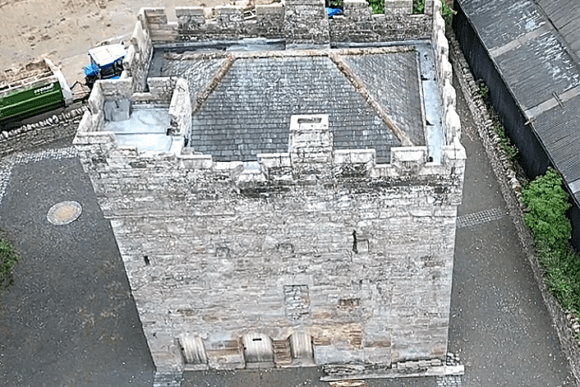
The three-storey tower is the main feature visitors see.
Its red sandstone walls rise above the farmyard.
In addition, the crenellated roof adds to its silhouette.
2. Ground Floor and Rooms
Inside, the ground floor once served as service space.
Fireplaces and door openings remain visible.
Moreover, the layout gives clues to daily domestic arrangements.
3. Views and Surroundings
The open fields and stone walls around the tower show where other buildings once stood.
Paths across grass reveal buried foundations.
In addition, the tower’s rural setting strengthens its historic atmosphere.
(Learn more at the official English Heritage Clifton Hall page.)
Visiting Clifton Hall
How to Get There
Location: Clifton, Penrith, Cumbria, CA10 2EA
Parking: Village layby near the church; footpath crosses fields to the tower.
Train: Penrith station (bus/taxi onward)
Bus: Rural services vary
Opening Hours & Admission
Open at daylight hours
Free access
Facilities
No on-site toilets or café
Paths cross fields and may be muddy
Nearby Attractions
Brougham Castle — Castle ruins by the River Eamont
Mayburgh Henge — Prehistoric earthwork enclosure
King Arthur’s Round Table — Neolithic ring site
Clifton Moor battlefield — Nearby historic battlefield area
Together, these form the Penrith & Eden Heritage Trail.
Why Visit Clifton Hall?
Clifton Hall offers:
A rare surviving medieval tower
Insights into border living and status
Free, open-air access
A calm rural setting
Whether you enjoy medieval buildings, border history, or quiet countryside stops, Clifton Hall provides a clear and compact heritage experience.
It’s not just a lone tower — it’s a fragment of a manor that tells a long story of life, conflict, and change in Cumbria.
No Reviews