
Brighton Beach — Seaside Culture & Coastal Views
Discover Brighton’s Famous Pebble Beach, Palace Pier, Seafront Attractions, Watersports, and Vibrant Coastal Culture 4 Madeira Dr, Brighton BN2 1TW
https://www.nationaltrust.org.uk › porthcurno
The beach itself is accessible at all times.
Specification
Outdoor SeatingOne of Britain’s Most Famous Seaside Destinations
Brighton Beach is one of Britain’s best-known urban beaches, combining a distinctive pebble shoreline with historic piers, seafront cafés, entertainment, watersports, and panoramic views across the English Channel.
Stretching along the lively Brighton and Hove waterfront, the beach has attracted visitors for generations. Its popularity grew dramatically during the Georgian and Victorian periods as Brighton developed from a small fishing settlement into one of England’s most fashionable seaside resorts.
Today, Brighton Beach remains at the centre of the city’s identity.
From Fishing Village to Famous Seaside Resort
Before Brighton became a fashionable destination, the settlement of Brighthelmstone was closely connected with fishing and the sea.
During the 18th century, wealthy visitors increasingly travelled to the coast because sea bathing was believed to provide health benefits. Brighton’s popularity increased further when the future George IV began visiting and later created the extraordinary Royal Pavilion.
The arrival of the railway from London in 1841 transformed Brighton again, making seaside trips accessible to far more people.
Brighton Beach became famous for:
Its distinctive pebble shoreline
Palace Pier
Victorian seaside heritage
Swimming and watersports
Seafront cafés and restaurants
Beachfront entertainment
Spectacular sunsets
Today, the beach remains one of England’s most recognisable seaside destinations.
Exploring Brighton Beach
1. The Famous Pebble Beach
Unlike many traditional British seaside resorts, Brighton Beach is covered primarily with smooth flint pebbles rather than sand.
The wide shoreline provides plenty of space for sunbathing, picnics, meeting friends, and watching the sea.
During summer, the central sections can become extremely lively. However, walking west towards Hove or further east provides quieter stretches of coastline.
The sound of waves moving through the pebbles is also one of Brighton Beach’s most distinctive features.
2. Brighton Palace Pier
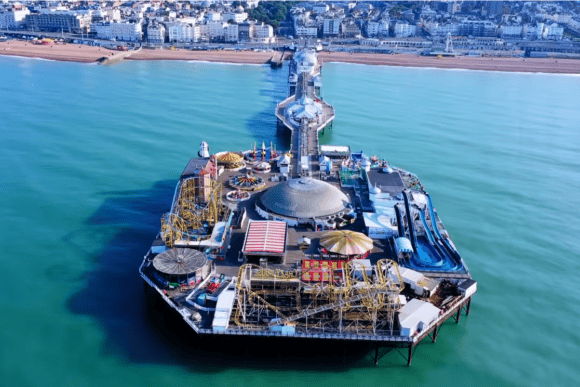
Dominating the central seafront is Brighton Palace Pier.
Opened in 1899, the historic pleasure pier stretches more than 500 metres into the English Channel.
Visitors can enjoy:
Fairground rides
Arcade games
Traditional seaside food
Doughnuts and ice cream
Sea views
Family entertainment
Walking to the end of the pier also provides excellent views back towards Brighton’s seafront and city skyline.
3. Brighton i360
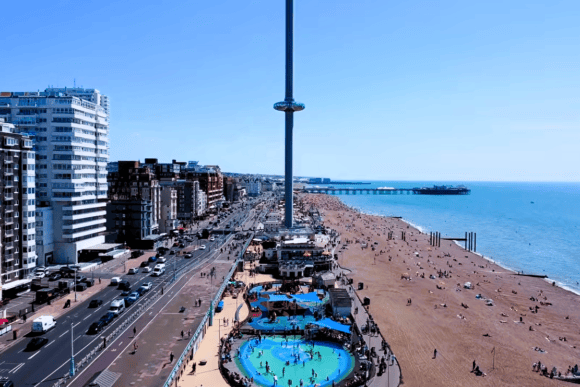
Further west along the seafront stands Brighton i360.
Its distinctive observation tower rises high above the waterfront, offering panoramic views across Brighton, the South Downs, and the English Channel.
On clear days, the elevated perspective reveals just how dramatically the city sits between the coast and surrounding countryside.
4. West Pier
Close to Brighton i360 are the haunting remains of Brighton West Pier.
Opened in 1866, the West Pier was once one of Brighton’s grand Victorian entertainment structures.
After decades of decline, storms and fires caused extensive damage. Today, its skeletal iron remains stand offshore.
Despite its ruined condition, the structure has become one of Brighton’s most photographed landmarks, particularly at sunset.
Brighton Beach at Sunset
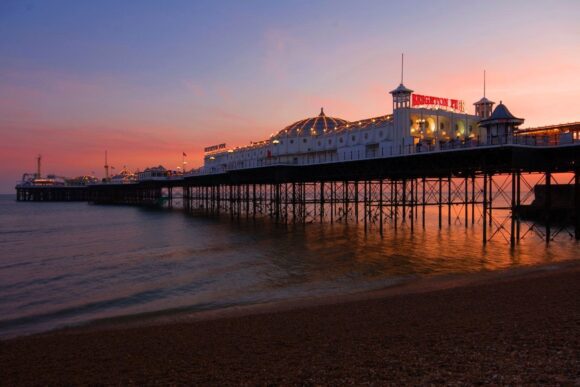
Evening is one of the most atmospheric times to visit Brighton Beach.
As the sun drops towards the horizon, the shoreline, West Pier ruins, and seafront buildings are transformed by changing light.
During warmer months, visitors gather along the beach to watch the sunset, while cafés, restaurants, and bars remain lively into the evening.
For photographers, the West Pier provides a particularly striking silhouette against the evening sky.
Swimming and Watersports
Brighton Beach is popular for swimming, paddleboarding, kayaking, sailing, and other watersports.
Visitors can find equipment hire and activity providers along parts of the seafront.
However, the English Channel can experience strong currents and changing conditions. Swimmers should therefore follow local safety information and use lifeguarded areas when available.
The pebbles can also make entering and leaving the water more difficult than on a sandy beach.
Volk’s Electric Railway
Running along the eastern seafront is Volk’s Electric Railway, one of Brighton’s most unusual historic attractions.
Opened in 1883, it is widely recognised as the world’s oldest operating electric railway.
The small trains travel along the seafront between the Palace Pier area and Black Rock, providing an enjoyable way to see another section of Brighton’s coastline.
Brighton Fishing Quarter
Between Palace Pier and the West Pier lies an area closely connected with Brighton’s fishing heritage.
The Brighton Fishing Museum explores the story of the families, boats, and traditions that shaped the town before tourism became dominant.
Nearby arches beneath the promenade now contain galleries, workshops, cafés, shops, and independent businesses.
This mixture of fishing heritage and contemporary culture adds another layer to the Brighton Beach experience.
Food, Cafés, and Seafront Life
Brighton’s waterfront offers far more than traditional fish and chips.
Visitors can find:
Seafood
Fish and chips
Independent cafés
Ice cream
Beachfront restaurants
Bars
International food
Vegetarian and vegan options
Many venues provide outdoor seating overlooking the beach.
Consequently, it is easy to spend an entire day moving between the shoreline, attractions, cafés, and restaurants without leaving the seafront.
Walking and Cycling the Promenade
Brighton’s long promenade makes the waterfront ideal for exploring on foot.
Visitors can walk west towards Hove, passing the West Pier, colourful beach huts, lawns, and quieter sections of coastline.
Heading east leads towards Madeira Drive, Brighton Marina, and the eastern beaches.
Cycling routes also follow sections of the seafront, providing another enjoyable way to explore.
Brighton’s Seaside Culture
Brighton Beach has developed a character that extends far beyond traditional seaside tourism.
Music, art, independent businesses, nightlife, festivals, watersports, and LGBTQ+ culture all contribute to the modern waterfront.
During major events and summer weekends, the seafront can become one of the liveliest places in southern England.
Yet quieter mornings and winter walks reveal another side of the beach, when the promenade and shoreline feel dramatically different.
Visiting Brighton Beach
How to Get There
Location: Brighton, East Sussex
Train: Brighton railway station is approximately 15–20 minutes from the central seafront on foot
Bus: Numerous Brighton & Hove bus routes serve the seafront
Walk: The beach is easily reached from The Lanes, Royal Pavilion, and North Laine
Cycle: Dedicated cycling infrastructure runs along parts of the waterfront
Car: Several city-centre car parks are available, although parking can be expensive during busy periods
Opening Hours & Admission
Beach open throughout the year
Free access
Individual attractions have separate opening hours
Palace Pier is free to enter, although rides and entertainment are individually charged
Seasonal facilities and watersports operators may have limited winter opening
Facilities
Public toilets
Cafés and restaurants
Bars
Beachfront shops
Watersports
Showers at selected locations
Seafront seating
Nearby parking
Public transport
Accessible promenade
Nearby Attractions
Royal Pavilion — Spectacular former royal residence with exotic architecture and lavish interiors
The Lanes — Historic maze of narrow streets filled with jewellers, boutiques, cafés, and restaurants
North Laine — Colourful district known for vintage shopping, street art, music, and independent businesses
Brighton Museum & Art Gallery — Museum exploring art, fashion, design, local history, and world cultures
Together, these attractions make Brighton Beach an excellent starting point for exploring the city.
Why Visit Brighton Beach?
The Brighton Beach experience offers:
One of Britain’s most famous pebble beaches
The historic Brighton Palace Pier
Beautiful coastal views and sunsets
Swimming, watersports, and seaside entertainment
Excellent cafés, restaurants, and beachfront culture
Whether you’re interested in photography, swimming, seaside history, food, entertainment, or simply relaxing beside the English Channel, Brighton Beach offers one of Britain’s most distinctive coastal city experiences.
It’s not just a beach — it’s the vibrant heart of Brighton’s seafront, where Victorian seaside heritage, iconic landmarks, contemporary culture, and the open waters of the English Channel come together.
No Reviews