
Corfe Castle — A Dramatic Medieval Fortress
Explore Towering Ruins, Civil War History, and Wide Dorset Views The Square, Corfe Castle, Wareham, Dorset, BH20 5EZ
Call us anytime 01929 481294
https://www.nationaltrust.org.uk/visit/dorset/corfe-castle
open 10:00 am – 5:00 pm daily (longer summer hours up to ~6:00 pm; winter hours ~10:00 am – 4:00 pm)
corfecastle@nationaltrust.org.uk
Specification
A Landmark Shaped by Power and Conflict
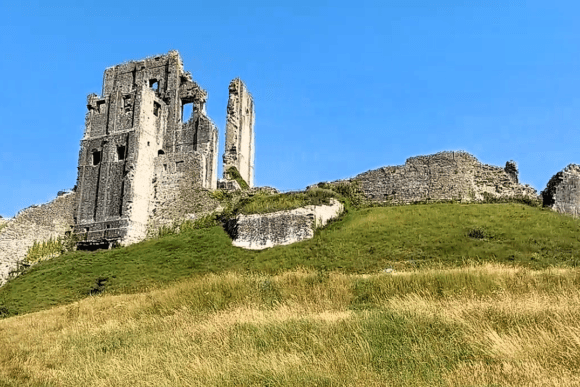
Rising above the village of Corfe, Corfe Castle is one of Dorset’s most famous historic sites.
Built by William the Conqueror, the castle dominated the Purbeck landscape for centuries.
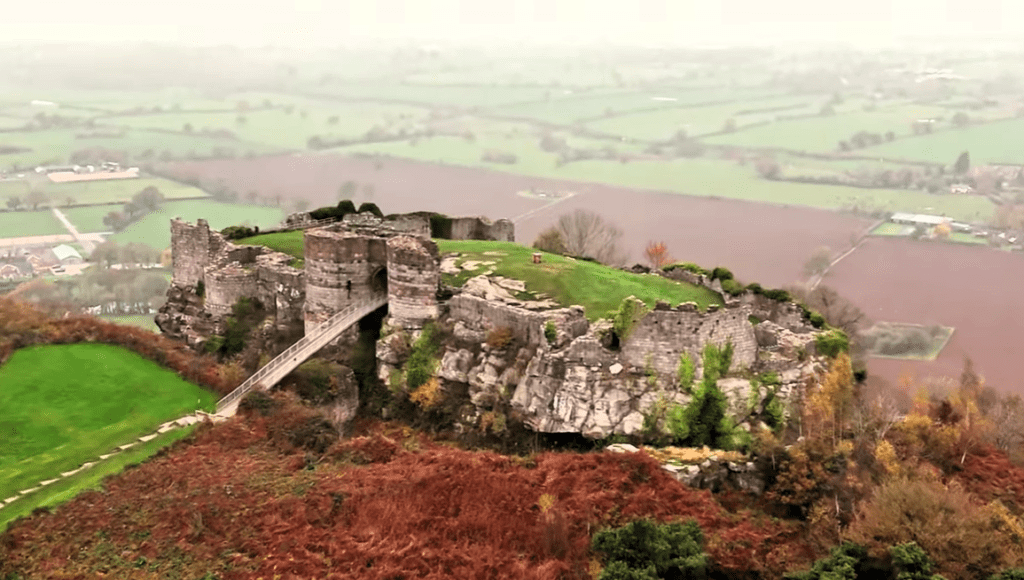
Today, its broken towers and high ramparts create an unforgettable silhouette.
It’s a dramatic ruin with outstanding views.
A Castle with a Long History
Corfe Castle began as a Norman stronghold in the 11th century.
It grew into a royal fortress and later a luxurious residence.
However, during the English Civil War, the castle was besieged and deliberately destroyed in 1646.
Therefore, its shattered walls tell a clear story of both power and destruction.
Key historic moments include:
Royal use under medieval kings
A strong garrison during the Civil War
Betrayal from within leading to its fall
Partial demolition after surrender
In addition, later centuries turned the ruins into a romantic landscape feature.
Exploring Corfe Castle
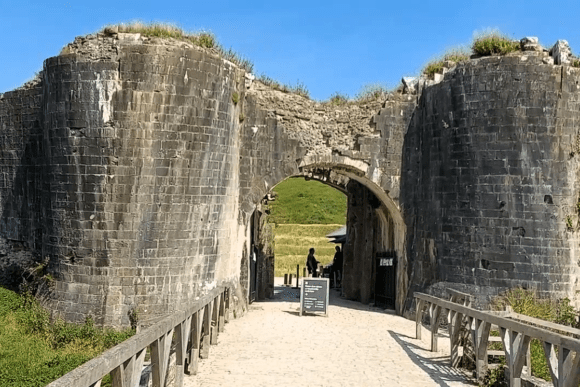
1. The Gatehouse and Outer Works
The gatehouse towers above the approach.
Walking through it reveals the first layers of defence.
In addition, the surrounding earthworks show how the castle controlled the natural gap in the hills.
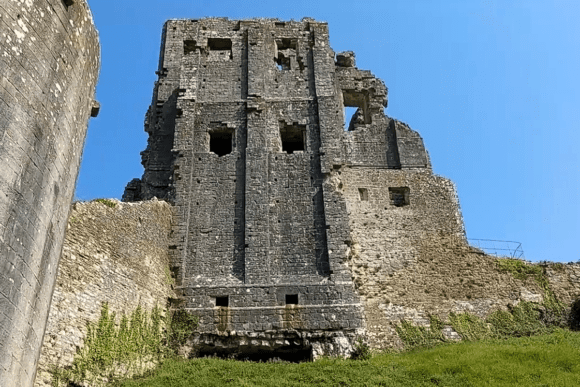
2. The Keep and Inner Bailey
The keep stands in striking, fractured blocks.
Its height offers excellent photo opportunities and wide views.
Moreover, interpretation panels help explain how the rooms were once used.
3. Panoramic Views Across Purbeck
From the upper levels, you can see across Corfe village, the Purbeck Ridge, and even out toward the coast.
These views highlight why the site was chosen.
Furthermore, the dramatic landscape adds to the atmosphere of the ruins.
(Learn more at the National Trust’s official Corfe Castle page.)
Corfe Village and Local History
The castle sits directly above Corfe village, which has stone cottages, pubs, and small shops.
Visitors often enjoy combining the castle with a walk through the village centre.
In addition, the Swanage Railway steam trains pass nearby, adding to the experience.
For more Dorset castles, see our guides to Portland Castle and Sherborne Old Castle.
Walks Around Corfe Castle
Several routes begin at the site:
Ridge walks along the Purbeck Hills
Paths to Old Harry Rocks
Trails toward Kimmeridge and the Jurassic Coast
Short loops around Corfe Common
Because the area is open and varied, visitors can enjoy anything from a short stroll to a longer hike.
Wildlife and Landscape
The hills around Corfe Castle support chalk grassland, birds, and butterflies.
Rabbits move across the slopes, and kestrels often fly above the ruins.
Furthermore, the Purbeck landscape is rich in geology and historic land use.
Visiting Corfe Castle
How to Get There
Location: Corfe Castle, Dorset
Parking: National Trust car park in the village
Train: Swanage Railway (heritage line); mainline at Wareham
Bus: Regular services between Swanage, Wareham, and Poole
Opening Hours & Admission
Open daily
Entry fee applies; free for National Trust members
Facilities
Visitor centre
Café
Toilets
Shops in the village
Nearby Attractions
Old Harry Rocks — Chalk stacks on the coast
Swanage Railway — Steam trains through Purbeck
Kimmeridge Bay — Fossils and Jurassic Coast scenery
Tyneham Village — Abandoned wartime village
Together, these make up the Purbeck Castles & Coast Trail.
Why Visit Corfe Castle?
The Corfe Castle experience offers:
Towering medieval ruins
Civil War history
Beautiful Purbeck views
A village full of character
Whether you enjoy castles, photography, or Dorset landscapes, Corfe Castle is one of southern England’s most impressive historic sites.
It’s not just a ruin — it’s a fortress shaped by centuries of ambition, conflict, and survival.
No Reviews