

Maiden Castle — A Massive Iron Age Hillfort
Explore One of Europe’s Largest and Most Impressive Hillforts Maiden Castle Road, Dorchester, Dorset, DT2 9PP
Call us anytime 0370 333 1181
https://www.english-heritage.org.uk/visit/places/maiden-castle/
open during daylight hours.
customers@english-heritage.org.uk
Specification
An Enormous Hillfort with Thousands of Years of History
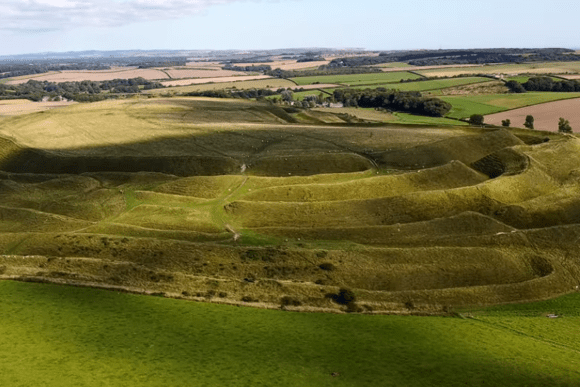
Just outside Dorchester, Maiden Castle rises from the landscape with dramatic, sweeping ramparts.
Created in the Iron Age, it became one of the largest and most complex hillforts in Europe.
Today, its long banks, open views, and wide walking paths make it an essential Dorset landmark.
It’s an impressive ancient site with a powerful sense of scale.
A Hillfort Built on a Grand Scale
Maiden Castle covers a vast ridge overlooking the surrounding countryside.
Construction began around 600 BC, and the fort expanded several times as communities grew.
Therefore, its huge earthworks reflect centuries of settlement and defence.
Archaeology shows:
Wooden palisades
Defensive ditches
Entrances designed to control attackers
Domestic areas with houses and workshops
In addition, finds reveal a long history of farming, trade, and ritual activity.
Roman Arrival and Later Use
The Romans reached the site in the 1st century AD.
They built a small temple on the eastern side of the fort, marking a shift from Iron Age settlement to Roman influence.
However, the hillfort itself declined as a living community.
The temple foundations remain visible today.
Therefore, Maiden Castle tells a clear story of cultural change across the centuries.
Exploring Maiden Castle
1. The Ramparts
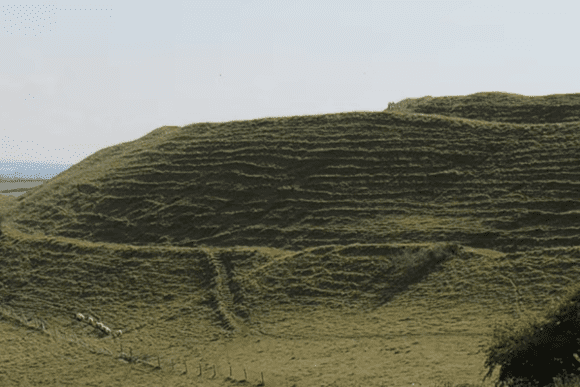
The fort’s ramparts rise in deep, curving layers.
Walking along these banks shows how large and complex the defences were.
In addition, the views from the top stretch across much of Dorset.
2. The Entrances
The eastern entrance is especially impressive, with intertwined banks and ditches.
This design slowed attackers and protected the fort.
Moreover, the pathways here help visitors understand Iron Age engineering in action.
3. The Hilltop Interior
The plateau at the top once held houses, storage areas, and working spaces.
Information panels describe the people who lived here.
Furthermore, the space is wide, open, and ideal for gentle exploration.
Learn more at the English Heritage website
A Walk Through Ancient Dorset
The site’s size makes it perfect for longer walks.
Paths loop across the ridge and link to surrounding fields.
Because the landscape remains open and quiet, it is easy to appreciate the historic setting.
Nearby, visitors often combine Maiden Castle with:
Dorchester Roman Town House
Maumbury Rings
Poundbury Hillfort
Wildlife and Landscape
Maiden Castle supports grasslands, wildflowers, and birdlife.
Butterflies, skylarks, and rabbits are common on the slopes.
In addition, the hillfort changes character with the seasons, from summer greens to winter sunlight.
Because of its openness, the site feels calm and natural throughout the year.
Visiting Maiden Castle
How to Get There
Location: Near Dorchester, Dorset
Parking: Small free car park at the base
Train: Dorchester South and Dorchester West
Bus: Local routes to Dorchester
Opening Hours & Admission
Open daily
Free entry
Facilities
No toilets or café
Information signs on site
Wide grassy paths
Nearby Attractions
Dorchester Roman Town House — Well-preserved Roman domestic remains
Jordan Hill Roman Temple — Coastal Romano-British shrine
Nothe Fort — Victorian fort with harbour views
Portland Castle — Tudor defensive fort
Together, they form the Dorset Ancient Landscape Trail.
Why Visit Maiden Castle?
The Maiden Castle experience offers:
Massive Iron Age earthworks
Wide views across Dorset
Clear Roman features
Free, open-air exploration
Whether you enjoy archaeology, ancient landscapes, or scenic walks, Maiden Castle is one of the most impressive prehistoric sites in Britain.
It’s not just a hillfort — it’s a vast monument shaped by centuries of human activity.
No Reviews