
Glastonbury Abbey — England’s Ancient Sacred Ruins
Explore Legendary Monastic Ruins Linked to Arthur, Saints, and Medieval Pilgrims Abbey Gatehouse, Magdalene Street, Glastonbury, Somerset, BA6 9EL
Call us anytime +44 (0)1458 832267
https://www.glastonburyabbey.com/
Open 10am−4pm (last entry 3:15pm*)
info@glastonburyabbey.com

Specification
Outdoor PicnicA Legendary Site Filled with History and Myth
In the centre of Glastonbury, the majestic ruins of Glastonbury Abbey rise from peaceful lawns and ancient trees.
Once one of the richest and most influential monasteries in England, it is famous for its links to early Christianity, medieval pilgrimage, and the legend of King Arthur.
Today, its dramatic arches and quiet pathways create one of Somerset’s most inspiring historic landscapes.
It’s a place where myth and history blend seamlessly.
A Monastery with Ancient Origins
Glastonbury Abbey may have origins as early as the 7th century.
Its early community became a centre of learning, worship, and cultural influence across the Southwest.
However, in 1184 the abbey burned down, leading to a grand rebuilding project that produced many of the ruins we see today.
Therefore, Glastonbury Abbey represents both loss and remarkable renewal.
Exploring Glastonbury Abbey
1. The Lady Chapel
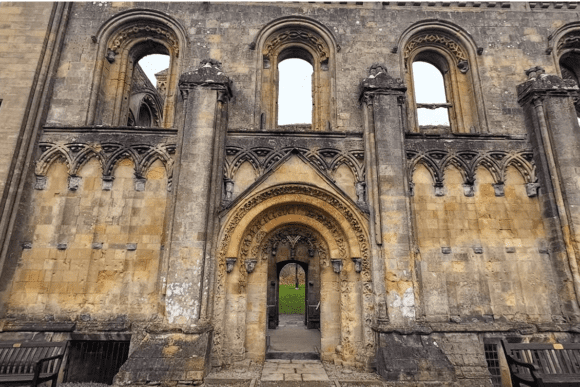
Standing at the west end of the site, the Lady Chapel is one of its finest surviving structures.
Its ornate carvings and elegant archways show the beauty of early Gothic craftsmanship.
In addition, it marks the traditional site of the abbey’s earliest Christian church.
2. The Nave and Great Church Ruins
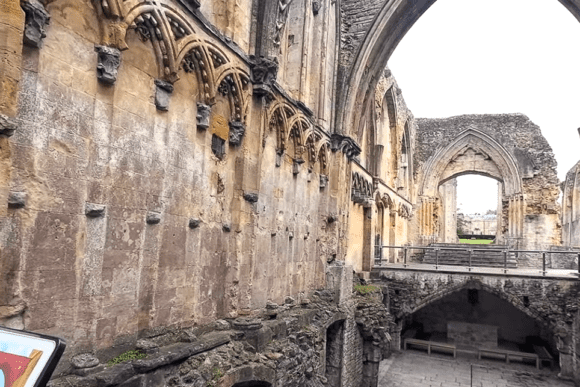
Tall stone walls stretch across the grounds, hinting at the vast scale of the medieval abbey.
Walking through these open ruins gives a vivid sense of the building’s former grandeur.
Moreover, the lawns create peaceful spaces to pause and take in the atmosphere.
3. The Site of King Arthur’s Tomb
Medieval monks claimed to discover the graves of King Arthur and Queen Guinevere here in the 12th century.
Their tomb was displayed in the abbey for centuries, attracting pilgrims from across Europe.
Furthermore, the supposed burial site remains one of the most-visited corners of the ruins.
Learn more at the Glastonbury Abbey website
A Place of Pilgrimage and Storytelling
For centuries, Glastonbury drew pilgrims seeking healing, spiritual insight, or connection to Arthurian legend.
Its reputation grew through stories of Joseph of Arimathea, the Holy Grail, and early saints.
Additionally, the remains of the cloisters, kitchens, and dormitory help illustrate the daily life of monks who lived here until the Dissolution of the Monasteries in 1539.
It’s not just a ruin — it’s one of Britain’s most storied sacred landscapes.
Visiting Glastonbury Abbey
How to Get There
Address: Magdalene Street, Glastonbury, Somerset BA6 9EL
By Car: Car parks within a short walk
By Train: Castle Cary (closest station)
By Bus: Frequent services from Wells, Bristol, and Bridgwater
Opening Hours & Admission
Open daily
Entry fee applies
Facilities
Visitor centre and museum
Toilets and gift shop
Beautiful gardens and open lawns
Accessible pathways
Nearby Attractions
Glastonbury Tor — Iconic hilltop with sweeping views
Chalice Well — Sacred spring and tranquil gardens
Glastonbury Tribunal — Tudor townhouse with museum
Somerset Rural Life Museum — Local heritage collections
Together, these form the Glastonbury Spiritual & Heritage Trail.
Why Visit Glastonbury Tribunal?
The Glastonbury Tribunal experience offers:
Beautiful Tudor architecture
Museum exhibits with Iron Age artefacts
A central location on a historic High Street
Links to Glastonbury’s medieval and mythical traditions
Whether you enjoy architecture, archaeology, or local legends, the Tribunal is an essential stop.
It’s not just a museum — it’s a doorway into Glastonbury’s centuries-old story.
Amenities
Free Admission Dogs On Leads Welcome Shop Accessible Toilets Toilet Picnic Area Food Public Car Park Garden Outdoor SeatingAbbey Gatehouse, Magdalene Street, Glastonbury, Somerset, BA6 9EL
Get DirectionsRecommended
No Reviews