
Dunster Gallox Bridge — A Medieval Packhorse Crossing
Walk Across One of Exmoor’s Most Charming and Historic Stone Bridges Park Street, Dunster, Minehead, Somerset, TA24 6SR
Call us anytime 0370 333 1181
https://www.english-heritage.org.uk/visit/places/gallox-bridge/
open during daylight hours
customers@english-heritage.org.uk

Specification
Outdoor Seating Free to enter Free to enterA Picture-Perfect Bridge in a Woodland Setting
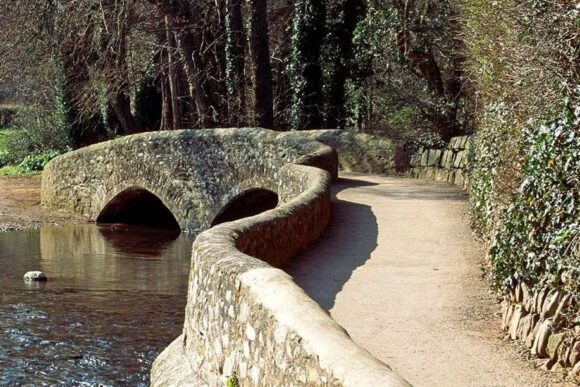
Just south of Dunster, the Gallox Bridge stands over the River Avill as one of Exmoor’s most photographed medieval landmarks.
Built for packhorses carrying wool and goods to market, this narrow stone bridge offers a serene, timeless setting.
Today, its woodland location, gentle river sounds, and easy access make it a favourite stop for walkers and photographers.
It’s a simple structure with centuries of local history.
A Bridge Built for Trade
The Gallox Bridge dates to the 15th century, when Dunster prospered as a centre for the wool trade.
Packhorses needed a safe route across the river, so builders constructed a narrow, high-backed stone bridge with low parapets.
However, its medieval design makes it too narrow for modern traffic, preserving its historic charm.
Therefore, the bridge remains an authentic reminder of Dunster’s busy trading past.
Exploring Dunster Gallox Bridge
1. The Medieval Stone Arch
The single-arched bridge rises gracefully above the clear river.
You can walk across it and admire the stonework that has endured for hundreds of years.
In addition, the height and curve of the bridge show how it was built specifically for packhorse trains.
2. Peaceful River and Woodland Walks
The bridge sits in a quiet valley filled with trees, birdsong, and flowing water.
Paths along the River Avill offer gentle walks suitable for all ages.
Moreover, the shaded riverside makes this a refreshing stop on warm days.
3. A Short Walk from Dunster Village
From Dunster, a pleasant footpath leads directly to the bridge.
Along the way, you’ll enjoy views of Dunster Castle rising above the landscape.
This makes the Gallox Bridge an easy addition to any visit to the village.
Learn more at the English Heritage website
A Landmark in a Village Full of History
Dunster is one of England’s best-preserved medieval villages, filled with historic buildings and market features.
The Gallox Bridge adds to this layered landscape by showcasing everyday medieval transport rather than grand architecture.
Additionally, the bridge’s quiet location contrasts beautifully with the bustling village centre.
It’s not just a crossing — it’s a link to a working life shaped by trade and landscape.
Visiting Dunster Gallox Bridge
How to Get There
Address: Gallox Bridge, Dunster, Somerset TA24
By Car: Park in Dunster village; walk via Mill Lane
By Train: West Somerset Railway (seasonal) to Dunster Station
By Bus: Local routes to Dunster village centre
Opening Hours & Admission
Open daily
Free entry
Facilities
No facilities at the bridge
Cafés, pubs, and toilets in Dunster village
Riverside paths; some uneven surfaces
Nearby Attractions
Dunster Castle — Magnificent hilltop castle and gardens
Dunster Yarn Market — Iconic 17th-century market hall
Dunster Butter Cross — Medieval market landmark
Cleeve Abbey — Beautiful monastic ruins nearby
Together, these create the Dunster Heritage Walk.
Why Visit Dunster Gallox Bridge?
The Dunster Gallox Bridge experience offers:
A charming medieval stone bridge
Peaceful woodland and river views
A short, scenic walk from Dunster
Free and easy outdoor exploration
Whether you enjoy history, photography, or quiet countryside walks, the Gallox Bridge is a rewarding and relaxing stop.
It’s not just a bridge — it’s a gentle step back into Dunster’s medieval past.

No Reviews