
Lindisfarne Priory — Sacred Ruins on Holy Island
Discover an Early Christian Centre Shaped by Saints, Vikings, and Pilgrims Holy Island, Berwick-upon-Tweed, Northumberland, TD15 2RX
Call us anytime 01289 389200
https://www.english-heritage.org.uk/visit/places/lindisfarne-priory/
Opening times vary depending on the tide because the island is cut off at high tide.
customers@english-heritage.org.uk
Specification
Outdoor PicnicA Cradle of English Christianity
Reached only at low tide, Lindisfarne Priory stands on Holy Island, a place where sea, sky, and faith meet.
Founded in AD 635, it became one of the most important religious centres in Anglo-Saxon England.
Today, its red-stone arches and sea-washed setting make it one of Britain’s most evocative historic sites.
It’s a place where early Christian history feels alive in the wind and waves.
A Monastery of Saints and Scholars
The priory began when St Aidan journeyed from Iona to spread Christianity across Northumbria.
His community flourished, teaching, healing, and producing texts — including the world-famous Lindisfarne Gospels.
However, in AD 793, Viking raiders struck the island, marking one of the first major Viking attacks in Britain.
Therefore, Lindisfarne stands at the crossroads of devotion, learning, and invasion.
Exploring Lindisfarne Priory
1. The Priory Church
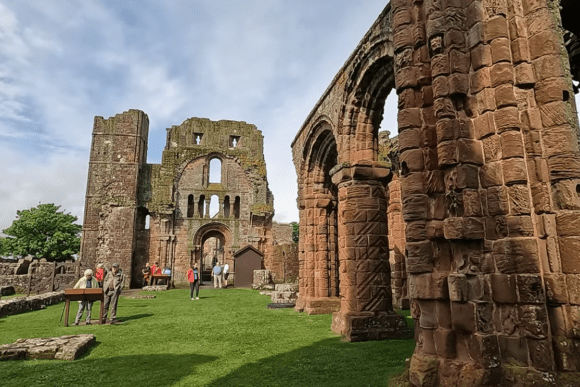
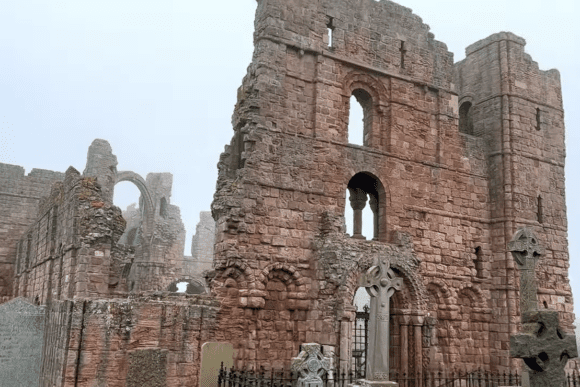
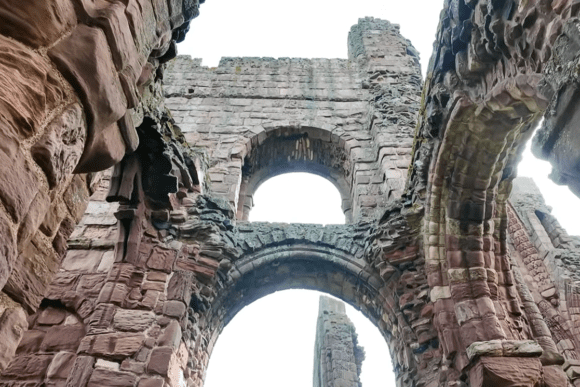
The red sandstone church dominates the site with its tall arches and ribbed columns.
The “Rainbow Arch”, a surviving piece of the tower, frames the sky where the tower once stood.
In addition, carved capitals and doorways show the skill of medieval masons.
2. The Monastic Buildings
Walk through the remains of the cloister, refectory, and dormitory.
These spaces reveal how monks lived, prayed, and worked on a tidal island.
Interpretation panels help you visualise life in a remote monastic world shaped by the sea.
3. The Priory Museum
The on-site museum houses treasures discovered on Holy Island.
These include sculptures, grave markers, and items linked to the Lindisfarne Gospels.
Furthermore, exhibitions explain how the island shaped early English Christianity.
Learn more at the English Heritage website
A Landscape Filled with Spirit
Lindisfarne combines archaeology with atmosphere.
The calls of seabirds, shifting tides, and wide skies make the ruins feel deeply spiritual.
Moreover, the walk from the village to the priory offers beautiful views of sand flats, wildflowers, and Lindisfarne Castle rising on a distant rock.
It’s not just a historic site — it’s a place of pilgrimage, reflection, and natural beauty.
Visiting Lindisfarne Priory
How to Get There
Address: Holy Island, Northumberland TD15 2RX
By Car: Check tide tables; causeway floods at high tide
By Train: Berwick-upon-Tweed (15 miles)
By Bus: Seasonal bus from Berwick to the island
Opening Hours & Admission
Open daily; hours vary with season
Entry fee applies; free for English Heritage members
Facilities
Museum, shop, and toilets on site
Cafés and pubs in Holy Island village
Paths mostly level; some uneven stone surfaces
Nearby Attractions
Lindisfarne Castle — Dramatic clifftop fortress
Bamburgh Castle — Iconic Northumberland stronghold
Budle Bay — Wildlife-rich coastal haven
Chillingham Castle — Atmospheric medieval castle
Together, they shape the Northumberland Coastal Heritage Route.
Why Visit Lindisfarne Priory?
The Lindisfarne Priory experience offers:
Ancient monastic ruins with deep spiritual significance
Anglo-Saxon and Viking history
Coastal scenery and wildlife
A unique tidal journey to the island
Whether you love early history, atmospheric ruins, or dramatic landscapes, Lindisfarne delivers something unforgettable.
It’s not just a visit — it’s a journey to the birthplace of northern English Christianity.
No Reviews