
Camden Market & Stables: London’s Icon of Cool
Shop, eat, and explore London’s creative side at Camden Market & Stables — where heritage meets street culture Stanley Sidings, Chalk Farm Road, London, NW1 8AH
Call us anytime +44 20 3763 9900
camdenmarket.com
Open daily from 10 am to 7 pm.
info@camdenmarket.com
Specification
One of London’s Most Iconic Markets
Camden Market is one of London’s most distinctive shopping, food, and cultural destinations, bringing together independent traders, international street food, vintage fashion, music, art, and entertainment beside the Regent’s Canal.
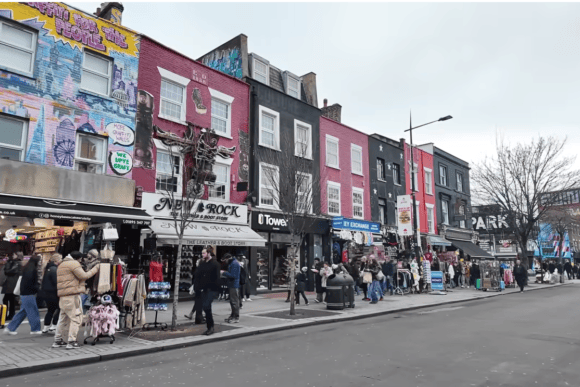
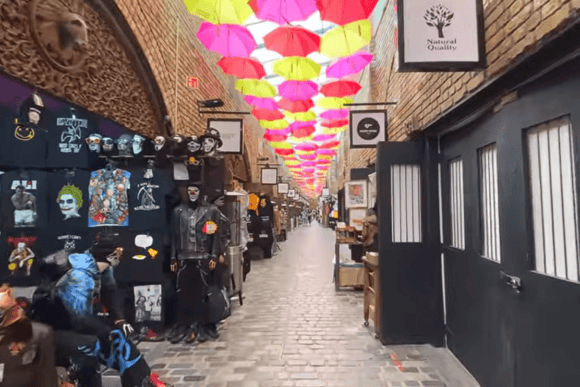
At its heart is the historic Stables Market, a maze of cobbled yards, brick arches, tunnels, former tack rooms, and railway stables that once supported Camden’s enormous Victorian goods depot.
Camden Market began in 1974 with just 16 stalls. Today, the wider market contains more than 1,000 places to shop, eat, drink, and explore.
It’s one of the best places in London to experience the city’s alternative and independent culture.
From Victorian Railway Depot to Famous Market
Long before Camden became famous for markets and alternative fashion, this part of London was a major centre for transport and industry.
The Camden Goods Depot opened in 1839, connecting railway freight with the nearby Regent’s Canal. Horses played a crucial role in moving goods around the enormous depot and between the railway and canal.
By 1849, more than 400 horses were employed at the site. Later developments included extensive stables, workshops, horse tunnels, ramps, and a dedicated horse hospital.
The surviving Horse Hospital was built in 1882–83, extended in 1897, and is now Grade II* listed. Historic England describes it as an unusually complete example of 19th-century industrial stabling.
Today, those remarkable industrial spaces form one of the most atmospheric parts of Camden Market.
Exploring Camden Market & Stables
1. The Stables Market
The Stables is perhaps the most visually distinctive part of Camden Market.
Its cobbled passages and brick buildings were once a network of stables, saddlers’ workshops, tack rooms, and facilities for working horses. Today, the same spaces contain independent shops, restaurants, bars, and entertainment venues.
Visitors can wander through:
Cobbled courtyards
Brick railway arches
Former stable blocks
Underground passages
Independent shops
Restaurants and food stalls
Historic horse ramps
The surviving architecture gives the Stables an atmosphere unlike almost any other London market.
2. The Famous Horse Sculptures
Large bronze horse sculptures appear throughout the Stables Market.
They commemorate the thousands of working horses that were once essential to Camden’s railway and canal industries.
Horses moved freight, shunted wagons, and transported goods between the railway depot and Regent’s Canal. The last shunting horse was withdrawn from service in 1967, marking the end of more than a century of horse-powered work at Camden.
Today, the sculptures have become some of Camden Market’s most recognisable features.
3. Vintage and Alternative Fashion
Camden has been associated with alternative fashion for decades.
Punk, goth, rock, rave, vintage, and streetwear cultures have all left their mark on the neighbourhood.
Visitors can browse:
Vintage clothing
Alternative fashion
Leather goods
Jewellery
Handmade accessories
Trainers
Retro clothing
Music merchandise
Art and prints
Camden’s fashion identity developed alongside its famous music scene, with designers and traders creating styles for the punks, rockers, mods, and bohemian communities that gathered here.
4. Camden Lock
The market’s modern story began beside Camden Lock.
On 30 March 1974, a small weekend market opened with only 16 traders selling antiques, jewellery, arts, and crafts. Its popularity grew rapidly, eventually developing into the enormous destination visitors experience today.
The waterside setting remains one of the most enjoyable parts of Camden Market.
Visitors can sit beside Regent’s Canal, watch narrowboats pass through the lock, or follow the towpath towards Regent’s Park and Little Venice.
Street Food from Around the World
Food is now one of the biggest reasons to visit Camden Market.
Stalls and small restaurants serve dishes inspired by cuisines from around the world.
Visitors can find:
Burgers
Tacos
Asian street food
Middle Eastern dishes
Caribbean food
Pizza
Desserts
Vegan and vegetarian food
Fresh juices and coffee
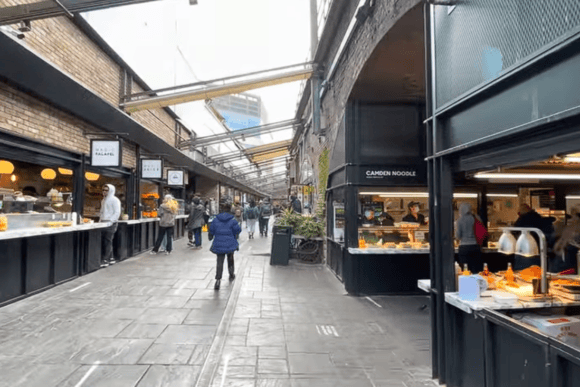
The canal-side West Yard is particularly associated with street-food traders, while the Stables contains both open-air stalls and sit-down restaurants.
Camden’s Music Heritage
Camden’s identity extends far beyond shopping.
The neighbourhood has played an important role in London’s music history, particularly in rock, punk, indie, and alternative music.
Nearby venues such as Dingwalls and the Roundhouse became associated with influential performers and counterculture movements. Camden Market notes that artists connected with the area’s music history include The Clash, Sex Pistols, and Blondie.
That musical heritage remains visible today through record shops, clothing, venues, street performers, and Camden’s unmistakably alternative atmosphere.
The Horse Tunnels
Hidden beneath parts of Camden are historic tunnels constructed to allow horses to move safely around the enormous railway goods depot.
The tunnels linked different parts of the railway infrastructure with the canal and Stables Yard.
At their peak, the network was used by hundreds of working horses. Much of the historic tunnel system survives, although public access varies.
These underground structures provide another fascinating reminder that the modern market occupies a genuine Victorian industrial landscape.
Independent Shopping
Despite Camden’s international popularity, independent businesses remain central to the market.
The wider Camden Market currently describes itself as home to 1,000+ shops, stalls, bars, and cafés.
Visitors can discover:
Handmade gifts
Art
Antiques
Collectables
Vintage clothing
Jewellery
Homeware
Records
Alternative fashion
Unusual souvenirs
Exploring the smaller passages and courtyards is often more rewarding than following only the busiest routes.
Regent’s Canal
The Regent’s Canal runs directly through Camden Market and provides a quieter contrast to the busy shopping streets.
Visitors can walk along the towpath, watch narrowboats pass through Camden Lock, or continue towards Regent’s Park.
Canal trips also operate through this part of London, providing a completely different perspective on Camden and its industrial heritage.
Visiting Camden Market & Stables
How to Get There
Location: Camden Lock Place / Chalk Farm Road, Camden, London
Underground: Camden Town — approximately 5 minutes’ walk
Underground: Chalk Farm — approximately 10 minutes’ walk
Overground: Camden Road — approximately 8 minutes’ walk
Bus: Numerous London bus routes serve Camden Town
Walk: Regent’s Canal provides an attractive walking route into the market
Current official visitor information lists the main Camden Market as open Monday–Sunday, 10am–7pm, including bank holidays, although individual independent traders may keep different hours.
Opening Hours & Admission
Open seven days a week
Main market: 10am–7pm
Free to enter
Individual attractions and experiences may charge admission
Individual trader opening times can vary
Facilities
Street-food areas
Restaurants and cafés
Bars
Independent shops
Toilets
Entertainment venues
Nearby Underground and Overground stations
Canal-side seating
Market maps and visitor information
Visit the official Camden Market website for current traders, food, events, maps, and visitor information.
Nearby Attractions
Roundhouse — Legendary music and performing arts venue housed in a former railway engine shed
Regent’s Park — One of London’s great Royal Parks
Primrose Hill — Popular viewpoint offering panoramic views across London’s skyline
London Zoo — Historic zoological attraction beside Regent’s Park
Together, these attractions make Camden an excellent area for a full day exploring North London.
Why Visit Camden Market & Stables?
The Camden Market & Stables experience offers:
One of London’s most famous markets
Historic Victorian stables and cobbled courtyards
Vintage and alternative fashion
Street food from around the world
Independent shops and unusual finds
A remarkable music and counterculture heritage
Whether you’re interested in shopping, food, photography, music, history, or London’s alternative culture, Camden offers one of the capital’s most distinctive neighbourhood experiences.
It’s not just a market — it’s a former Victorian railway and horse-working complex transformed into a colourful cultural destination where industrial heritage, independent traders, global food, music, and alternative London come together.
See our guide to Shoreditch for another London neighbourhood famous for street art, vintage shopping, markets, and alternative culture.
No Reviews